
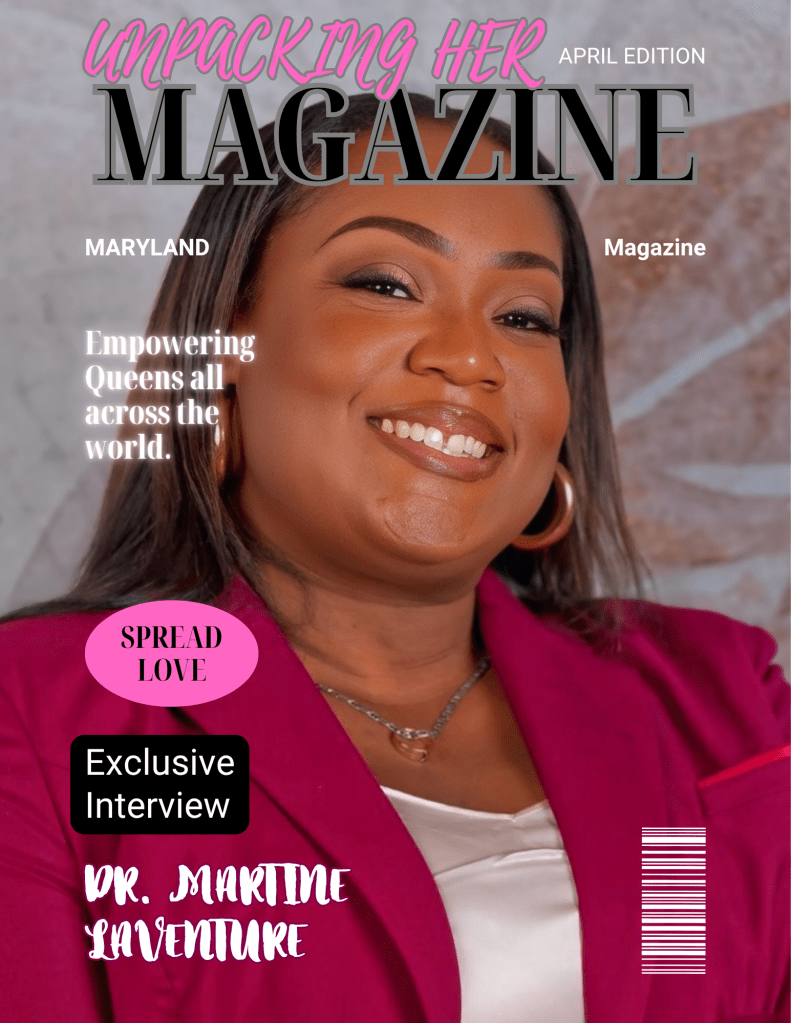
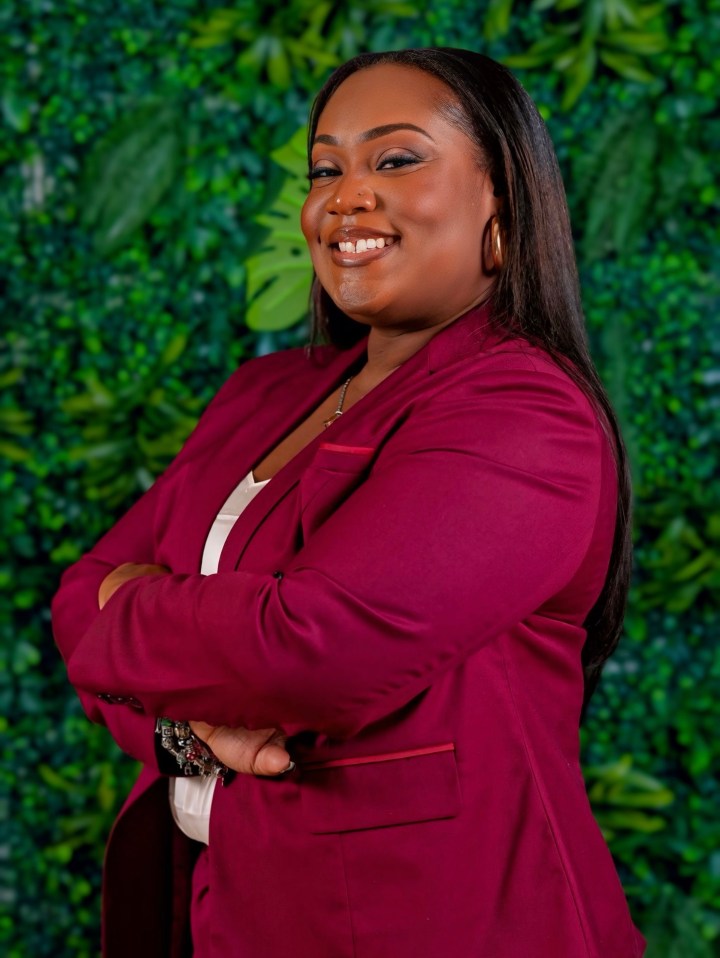
I would like to introduce you all to Dr. Martine Laventure, DSW, LMSW. She is a beloved social worker with over 14 years of experience. She is committed to helping others and making a huge impact on people’s lives. Dr. Martine has a doctorate from Tulane University and is the owner and founder of Laventure Consulting Services, LLC.
Being a school social worker has allowed her to assist students and families with overcoming challenges in order for their betterment. As we continue living our lives, challenges arise in a variety of different forms and ways; it’s a beautiful thing when we have extraordinary people like Dr. Martine to help us through.
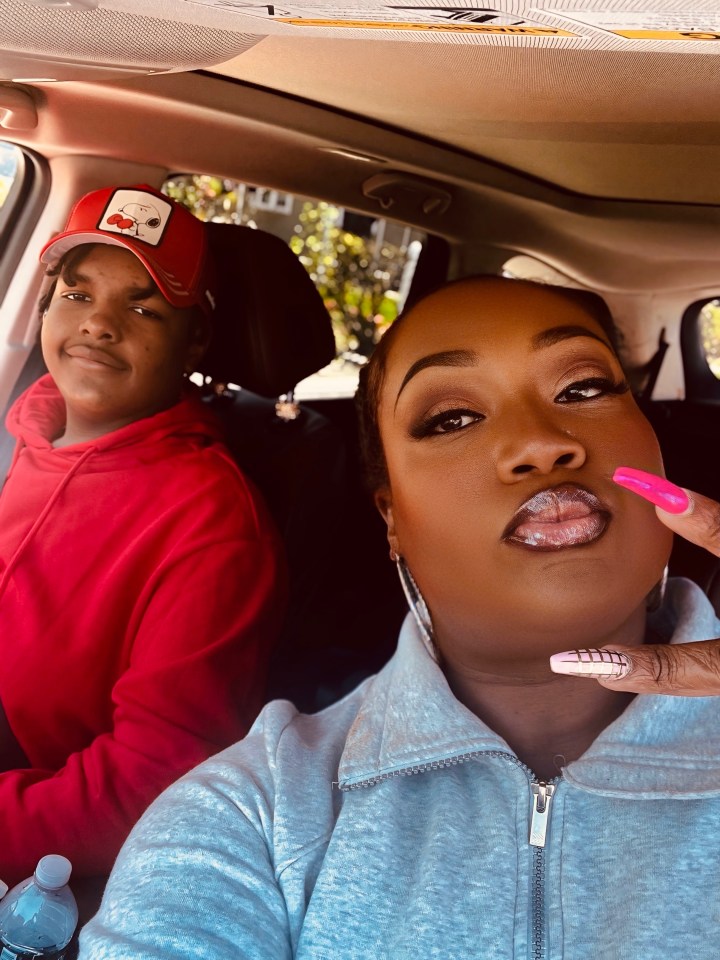
Outside of her social work and being of service to others, she is a very proud mother to an amazing son who was diagnosed with autism. Dr. Martine has used this diagnosis as a stepping stool to advocacy. She is spreading much-needed awareness and changing the trajectory of people’s perception, understanding, inclusion, and acceptance of those who are uniquely made. What a powerful and inspirational queen!! Learn more and check out her interview below!
What led you into the field of social work?
I laugh every time I hear this question because when I was like 4-5 years old, I swore I was going to become the next Matlock. I told everyone that this little girl from Queens, NY was going to be the biggest attorney the world has ever known. When I got a little older and started watching the OJ trial (yes, I was 10 years old glued to the trial lol), I became even more mesmerized and said when I get older, I’m gonna work for the Cochran firm lol. However, that all changed when I was in high school, and I went through a traumatic experience. At 15, I met two people who changed my life the most: the high school social worker and school psychologist. They really helped me out through a very dark time in my life. With what they did for me, I knew in that moment that for me to show them my gratitude, I had to become something that my younger self needed, and that was somebody like them. It meant I was going to become a social worker, and it was the best decision I’ve ever made, and I haven’t looked back. What’s even more amazing is that I now work as a school social worker in the same school district I was a student in. So, this wonderful social worker and school psychologist that I met when I was 15 years old are now colleagues! Even better, they have been instrumental in my son’s life as he is a student in the district.
I think it takes an extraordinary person and resilient mindset to be of service to others in the way that you have been and continue to be. What made you want to work in the specific area of schools, helping students and families? How detrimental is having this kind of support for any student’s growth and success, and especially as they leave the realm of school?
It does really take a special type of person to work in this field and have this mindset to be of service to others. It’s not something that’s easy. What I feel that makes it extra special for me is I know that I’m in the place where I’m meant to be, and I’m truly walking in my purpose. I’m being who I needed when I was younger. The smiles that I see in the students faces, the way their eyes sparkle when they see me, or even how they say, “Hi Ms. Dr. Laventure” make me know I made the right decision coming into this field working with children and their families. Being able to help families through whatever their issues are and seeing them come out of those issues is special. I get to watch my younger students become older and complete high school and start planning their lives. I smile to myself and say, Wow, I got to be part of that journey.
I feel that I was lucky enough to experience the level of support I needed when I was younger, and without that support I wouldn’t be here today. The path I was on was nothing but trouble, and I was one of the few who came out of it. So how can I not do the same for somebody else? Especially when it’s paramount to their success.
I understand that you are an advocate for autism, and you have a son who was diagnosed with autism. If you’re comfortable, can you talk about it further? For those who may not know, what does autism entail, and what has your experience been like navigating the diagnosis thus far? What does it mean to be on the autism spectrum? Can you shed more light on the meaning of this?
Yes, my son, who is now 18, was diagnosed with autism spectrum disorder when he was around three years old. Autism spectrum disorder is a neurological and developmental disorder that affects how people interact with others, communicate, learn, and behave. Autism can be diagnosed at any age; I’ve known some people who have gotten diagnosed as young as two and as old as 45. Being diagnosed can be especially challenging for those people who are of color. Unfortunately, statistics show that people of color are prone to be diagnosed actually later in life due to medical biases, stigma, lack of resources, and lack of understanding of what the diagnosis is. Autism is described as a developmental disorder because symptoms generally appear in the first two years of life. When you’re taking your child for their regular checkups, the doctor will ask you if your child or children are meeting their developmental milestones, like talking, walking, toileting, and how they respond to other adults and things of that nature, to monitor or determine any developmental delays.
Just like everyone on the spectrum will have different experiences, my experience navigating his diagnosis has differed from other parents. I must always say that I do not take for granted the fact I am a social worker. The fact that I am a social worker has helped me navigate through the systems a little bit better. It doesn’t mean that I am not experiencing roadblocks, but my approach to these roadblocks is different because of my role as a social worker.
My son‘s autism journey has had its ups and downs. It’s really been like a roller coaster. Some days are better than the next, but I wouldn’t change it for anything. My son began his journey with major speech delays, and us being told that he may never really speak in complete sentences or would never transition into a general education environment. We went through a series of supports when he was younger, like speech therapy and occupational therapy, because some of his fine motor skills were behind. I’m lucky to say that today he is a senior in high school, and he’s graduating in June and headed to college in the fall.
So yes, there are going to be moments where you’re scared and you don’t know what to do, but then those moments are really overshadowed by the successes that they have. There are some moments where I’m like, ready to throw in the towel because it’s hard navigating those roadblocks and over-explaining myself to everyone who doesn’t understand what this experience is like, and I get frustrated because why do I have to over-explain myself? Why can’t it just be that he is overwhelmed in this moment? Give him some grace; give him some patience. No, we cannot attend this event because I know the environment would be too much for him to handle. This has nothing to do with you and has everything to do with my son.
Fighting for what he deserves, such as certain treatment modalities, whether it’s therapy or services in school, there are a lot of things that I have to constantly fight for, and people are under the assumption that I don’t know my rights, and this is again where my role as a social worker comes into play, and I’m going to advocate for my son because if I don’t advocate for my son, who will? This is why I became an advocate for autism awareness because I want to empower other parents and caregivers. I want to help them understand that you are your child’s or relative’s advocate first and foremost. You have to educate yourself so you can be better equipped to fight.
As history has shown us in the past and now in the present day, being Black is challenging in this world in itself. How do you feel about being a Black mother to a Black son who has autism? How are you feeling mentally about this journey thus far, and what specific aspects of it do you advocate for?
Being a mother of a Black son is already difficult because there’s so much to worry about because society has not always been kind to our Black boys. I already worry because my baby is big. He is almost 6’3” and 250-something pounds, and to someone on the outside, he may look aggressive because of how he towers over you, but he’s a gentle giant.
But being a mother to a Black son who is on the spectrum is terrifying. It’s one of the scariest things I’ve done in my life, but it’s also one of the most rewarding things I’ve ever done in my life. I don’t want to sound dramatic or anything, but I am petrified, and I’ll be honest because he, like most people on the spectrum—and I mean most, not all, because I don’t want to generalize—his understanding of danger is not the same.
I always joke around with him, and I say to him, “Why is it that the things that you are supposed to be scared of, you walk into like it was nothing, and the things that you’re not supposed to be scared of scare you?” As much as I joke about it, I am serious because his father and I are concerned about what his interactions may be with law enforcement and how he would be able to understand simple demands of a police officer because he’ll become very overwhelmed by their presence and overwhelmed by their tone of voice, and if scared, he may not comply. What does that now mean for him? I’m concerned that because he struggles socially, he may be led to do something he shouldn’t do or be somewhere he shouldn’t because he couldn’t identify the danger.
I also recognize that being a person of color and having my son on the spectrum, there will be people who won’t be paying attention to his diagnosis and instead are focusing on their biases. Many children of color who have neurodivergent diagnoses are treated as behavioral problems. People determine that the child is just disrespectful or just doesn’t listen and would rather punish them than get them help. As a Black mother, I’m having to fight through those stigmas and biases.
I’m always thinking about the adult version of my son and what that would mean for him, so I’m always prepping and speaking with him and explaining to him what things he must look out for. How he can take care of himself. Always practicing his address and his phone number, making sure he has his ID on him, and knowing who to contact if he were to be in trouble. Always role-playing scenarios and making sure he knows how to be proactive instead of reactive.
I advocate for parents to be equipped with knowledge. How to create partnerships with schools and medical staff. I advocate for patience and understanding from peers and community members. I advocate for people like my son who may not have a voice. I advocate for families who lack the means to access the resources to support their children.
Tell us about your business, Laventure Consulting Services, LLC!!! What does it entail, and what services do you offer?
Laventure Consulting Services has been my baby, and it has taught me so much about myself, has helped me step out of my comfort zone, and has truly reminded me that I have a voice and a calling. I started Laventure Consulting Services LLC in April 2024 because throughout my 15-year career as a school social worker, nonprofit administrator, therapist, and advocate, I found myself repeatedly drawn to staff development. I loved creating spaces where practitioners, educators, and caregivers could build skills, feel seen, and grow in confidence. Pouring into others has always been second nature to me, and after years of doing it within systems, it only made sense to expand that work on my own terms.
Laventure Consulting Services also reflects my passion as an autism advocate and mother. I’ve seen how harmful misinformation, isolation, and systemic barriers affect families like mine. I’m committed to debunking false narratives, spreading real awareness, and making sure families know their rights, understand their options, and feel less alone in their journey.
Through Laventure Consulting Services, I provide staff development, program evaluation, parent support services, individual and group coaching, and impactful speaking engagements. Whether I’m leading a workshop, supporting a family, or speaking on stage, I bring a mix of professional insight and lived experience to help others feel empowered, informed, and supported.
When you’re not busy pouring into others, how are you practicing self-care?
Being able to pour back into myself is not the easiest thing. Cuz sometimes I’m like, “self-care where or self-care who?” lol. Seriously though, I’m becoming more in tune with myself lately, and I first started by going to therapy. As a therapist, it makes sense because to do the work I gotta “do the work.” It has honestly been the hardest and best thing I’ve done for myself. Being able to stare back at my reflection and say, “Hey girl, you need somewhere to lay this heavy load down,” has been transformative. Creating content on my business IG has been somewhat healing for me. The messages I post are meant to inspire others, but it’s been motivating for me. I also make sure I take care of myself physically. I’ve been eating better and making sure I go to my doctor’s appointments.
Unpacking Her Thoughts:
My gem that I would like to leave your readers with is:
“Your story is more than your struggle it’s your superpower. Use it to advocate, to educate, and to create the community you needed when you first started your journey.”-Dr. Martine Laventure
Thank you so much, Dr. Martine!
Connect with Dr. Martine:
Websites: linktr.ee/laventurecsllc
IG: @laventurecsllc
 A Women’s Magazine